
5 things every worker should know about this May Day
Reflecting on the world of work this International Workers' Day

Hey friends, hey subscribers
It's May Day and International Workers' Day today. I hope you'll enjoy your day. Here are 5 things every worker should know about.
If you want to support this Substack, please hit that like button or leave a comment for the algorithm.
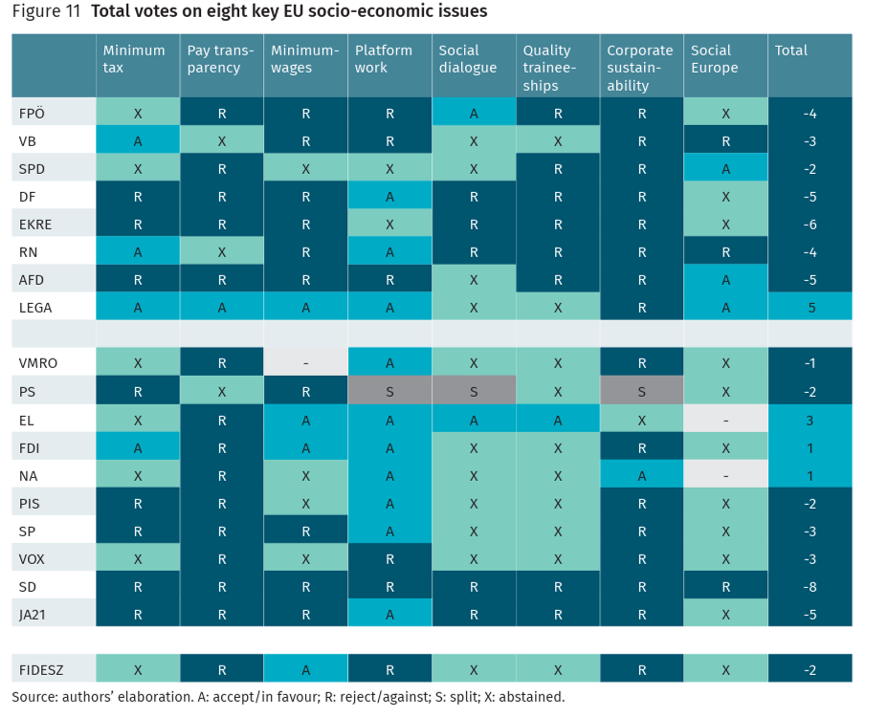
The far-right is not your friend
In their policy brief ‘Talking left, voting right - An assessment of far-right voting on socio-economic issues in the European Parliament’ Gabriela Greilinger and Cas Mudde show that far-right parties overwhelmingly don’t vote for pro-worker legislation in the European Parliament
2. AI is deepening divisions in our workplaces
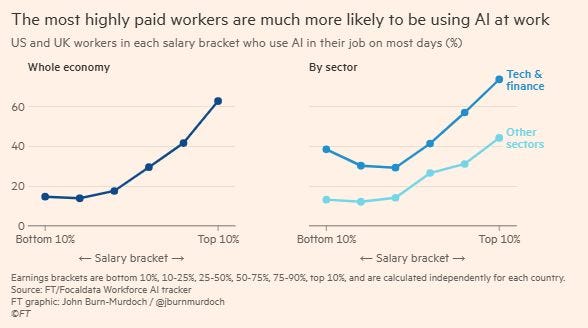
The Financial Times crunched some data from the US and UK showing that higher earners are more likely to use generative AI in workplaces than those in lower wage groups.
Nobel laureate Daron Acemoglu on the results: “The rhetoric out there is that the tools are going to be democratising. But the reality is that . . . you require a certain degree of education, abstract and quantitative skills, familiarity with computers and coding in order to be using the models... AI is going to increase inequality between labour and capital. That is almost for sure. I would say it is setting us up for a . . . shitshow.”
In Europe, it’s mainly men in factory jobs who are losing work
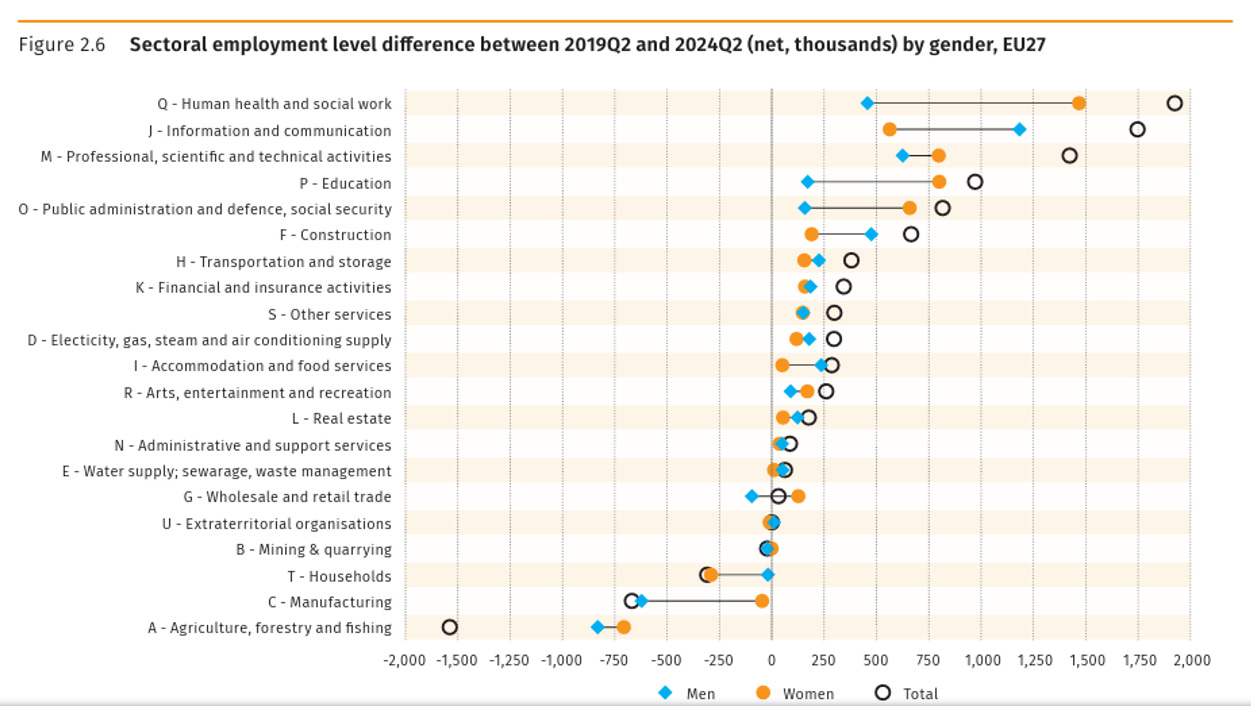
In the newest etui report ‘Benchmarking Working Europe 2025’ (Chapter 2), a graph displays job growth and losses between 2019 and 2024 across the European Union. The strongest growths are among women working in human health and social work and men in IT. Men working in agriculture and manufacturing, on the other hand, have been hit the hardest in the last five years.
We are in the post-’Bullshit Jobs’-era
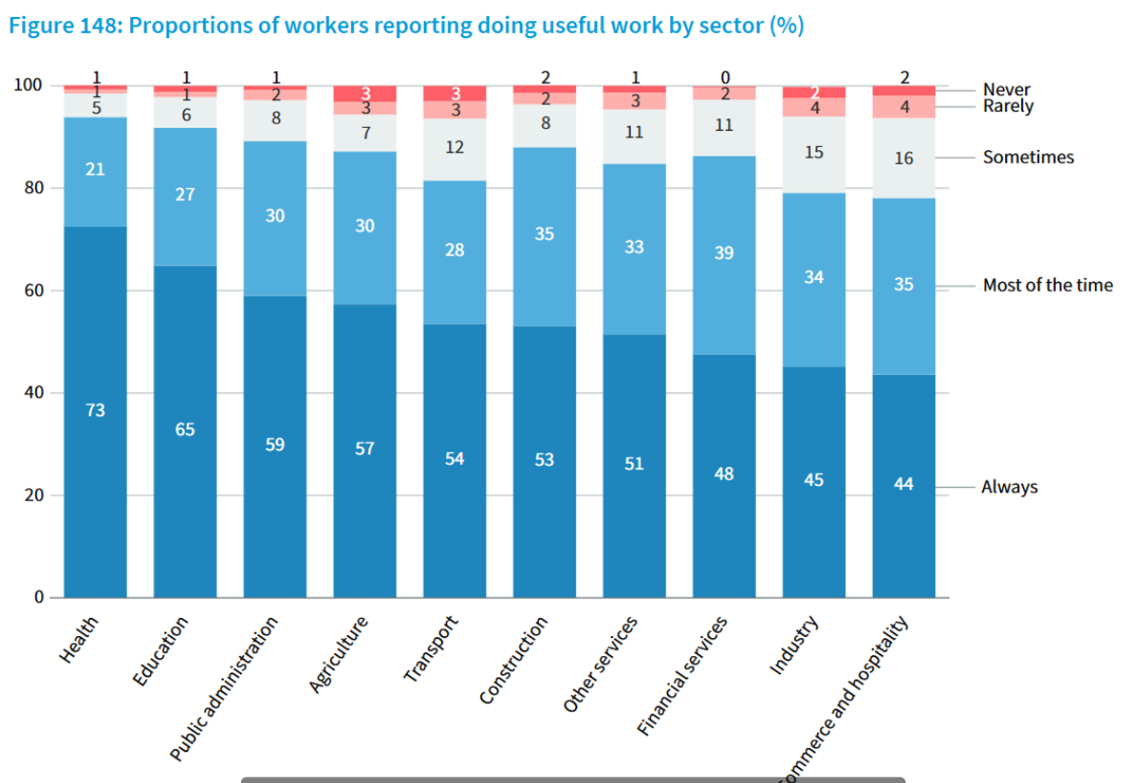
Eurofound’s European Working Conditions Survey 2024 published a couple of days ago shows that 85 % of workers find their work useful always or
most of the time. 44 % never do things at work that they disapprove
of, but 30 % say they sometimes or more often do. Workers in the hospitality and commerce sectors have the highest rates of persons stating that they never find their work useful. However, this is only 2 per cent.
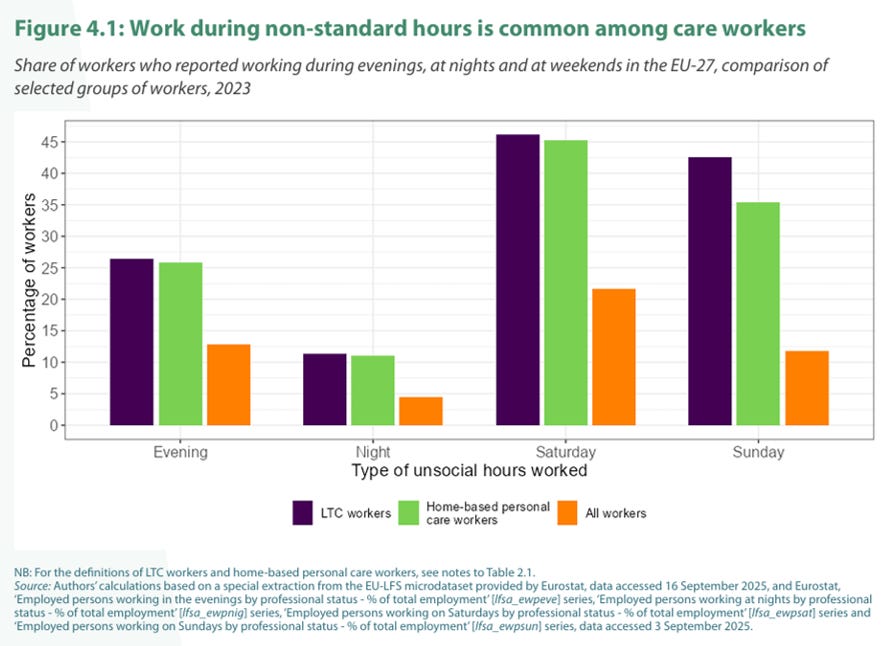
For care workers, the weekend is working time
Discussions on the four day week abound. However, if you look at cleaners, security guards or care workers you will see that the idea of a working week has already been fragmented and that they tend to work on Saturdays and Sundays. Moreover, their working time renders them time-poor, making unionisation or other forms of political engagement difficult. The following bar chart from the ‘ELA report - The long-term care sector: Labour mobility and enforcement challenges’ underlines this.
That's it folks.
In solidarity,
Mark